
The Center for American and International Law’s Criminal Justice and Actual Innocence (CJAI) programs team brought legal professionals together throughout August for three grant-funded programs focused on capital defense, forensic DNA evidence and the intersection of criminal and immigration law.
Though the subject matters differed, each program addressed the same underlying challenge: how legal professionals can make better-informed decisions when the stakes are especially high. Together, the programs reflected CAIL’s mission to advance the administration of justice through education and CJAI’s focus on strengthening practice across the criminal justice system.
“Each of these programs addresses an area where knowledge and preparation can directly affect the quality of representation and decision-making,” shared Jennifer Martinez, CJAI Programs director. “Our goal is to give criminal justice professionals practical tools they can take back to their work and use when the stakes are highest.”
The month began August 6–7 in Plano with Strengthening Texas Capital Defense: Strategy, Skills, and Case Development. Designed for attorneys handling capital cases or working toward qualification for capital defense appointments, the program focused on the legal, scientific and human factors that shape effective representation.
Faculty addressed neuropsychology and the use of mental health experts, cognitive bias in forensic evidence, jury selection, cultural competence, client-centered representation and approaches to future dangerousness. Workshops and case-focused instruction gave participants practical tools for navigating the complex decisions that arise throughout a capital case.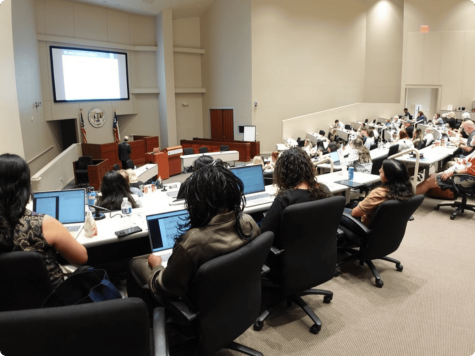
Photo: A full house in Plano during the CJAI program “Strengthening Texas Capital Defense” on August 6.
Less than a week later, DNA on Trial: What Judges and Lawyers Need to Know brought judges, attorneys, forensic scientists and other professionals together in Austin to examine one of the criminal justice system’s most powerful — and often misunderstood — forms of evidence.
Held August 12–13, the program followed DNA evidence from collection and laboratory processing through interpretation, statistics, courtroom testimony and post-conviction review. Faculty also explored emerging issues such as probabilistic genotyping and forensic genealogy.
The program reinforced a critical point: scientific evidence is only as useful as the ability of legal professionals to understand its meaning and limitations. By bringing together professionals from different parts of the justice system, CAIL provided a neutral setting to examine those questions from multiple perspectives while supporting broader efforts to reduce the risk of wrongful convictions.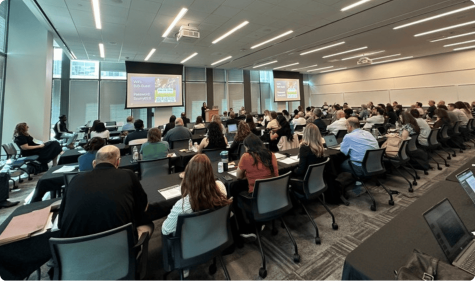
Photo: Legal professionals convened in Austin for the CJAI program “DNA on Trial” on August 12.
The month concluded August 20 in Plano with Collateral Damage: Immigration Consequences of State Crimes, which focused on consequences that may not appear in a criminal sentence but can fundamentally alter a defendant’s future.
The defense-focused program examined the intersection of state criminal law and federal immigration law, including the obligations established by the U.S. Supreme Court in Padilla v. Kentucky. Faculty addressed the immigration implications of criminal charges and plea decisions, collaboration with immigration counsel, post-plea relief and the transition from criminal custody into immigration detention.
The broader lesson extended beyond immigration law: effective representation requires attorneys to understand the full consequences of the decisions they help clients make.
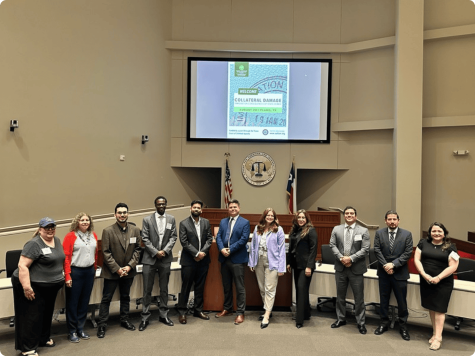
Photo: A full house in Plano during the CJAI program “Collateral Damage Immigration Consequences of State Crimes Texas" on August 20.
Across all three programs, the responsibility remained the same. Capital defense requires attorneys to understand the person and circumstances behind the case. DNA evidence requires lawyers and judges to understand the science behind the conclusion. Representing a noncitizen defendant requires counsel to anticipate consequences that may unfold in a rapidly changing immigration legal system. Each requires preparation, informed judgment, and the ability to look beyond the immediate legal question.
“CAIL’s mission is rooted in the belief that education strengthens the administration of justice,” said Thomas (T.L.) Cubbage, CAIL’s president. “These programs put that mission into practice by helping legal professionals navigate difficult questions with greater knowledge, perspective and confidence.”
With support from grants awarded by the Texas Court of Criminal Appeals, CAIL’s CJAI programs give legal professionals opportunities to strengthen their knowledge, learn across disciplines and bring stronger practices back to the courtrooms and communities they serve.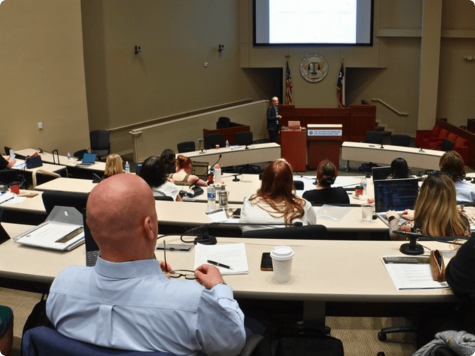
Photo: David Freedman, Federal Capital Trial Project leads session on Neuropsychology: Under The Hood during the CJAI program “Strengthening Texas Capital Defense” on August 6.
In August, CAIL's grant-funded CJAI programs convened 297 participants from across the justice system - defense attorneys, prosecutors, public and private defenders, and law enforcement professionals.
Looking Ahead
CAIL extends its appreciation to the Texas Court of Criminal Appeals for its support of these programs; to the program chairs, faculty and subject-matter experts who shared their knowledge and experience; and to the attorneys, judges and other justice professionals who contributed to each program.
As criminal practice continues to evolve alongside advances in science, changes in law and increasingly complex collateral consequences, CAIL’s Criminal Justice and Actual Innocence programs will continue providing practical education that strengthens professional practice and supports the fair administration of justice.
For information on upcoming Criminal Justice and Actual Innocence programs, visit www.cailaw.org/Criminal-Justice or contact the CJAI team at cjai@cailaw.org or 972-244-3415.
###
About the Criminal Justice and Actual Innocence Programs at The Center for American and International Law – Established in 2003 and supported by grants from the Texas Court of Criminal Appeals, The Center for American and International Law's (CAIL) Criminal Justice and Actual Innocence (CJAI) programs are focused on advancing justice and reducing wrongful convictions through specialized training for defense attorneys, prosecutors, and other justice system stakeholders. Through seminars, workshops, and expert-led sessions, CAIL's CJAI programs address critical issues in criminal justice, fostering a deeper understanding and promoting the highest standards of practice. For more information, visit www.cailaw.org/Criminal-Justice.