

The Institute for Transnational Arbitration (ITA) of The Center for American and International Law (CAIL) convened the 38th Annual ITA Workshop and Annual Meeting on June 10–12, 2026, at The Westin Oaks Houston. Under the theme The Fragile Foundations of International Arbitration: Consent Contested, Capacity Questioned, Legitimacy at Stake, the three-day program drew more than 200 practitioners, arbitrators, academics, in-house counsel, and emerging professionals from 22 countries and regions around the globe for rigorous discussions on one of the most consequential questions facing the field today: whether international arbitration can adapt to modern realities without sacrificing the voluntary, consent-based foundations that have long made it a trusted mechanism for resolving cross-border disputes.
The ITA Workshop, held since 1989, is widely recognized as one of the leading conferences in international arbitration in the United States. The 2026 program was co-chaired by Dr. Crina Baltag of Queen Mary University of London, Elliot Friedman of Freshfields US LLP, and Silvia Marchili of White & Case LLP. The Young Lawyers Roundtable was co-chaired by Enrique Jaramillo of FBFK Law and Mevelyn Ong of Sidley Austin LLP. Charles H. (Chip) Brower II, Chair of the ITA Advisory Board, opened and anchored the program, with closing remarks delivered by CAIL President Thomas (T.L.) Cubbage at the end of the first day.
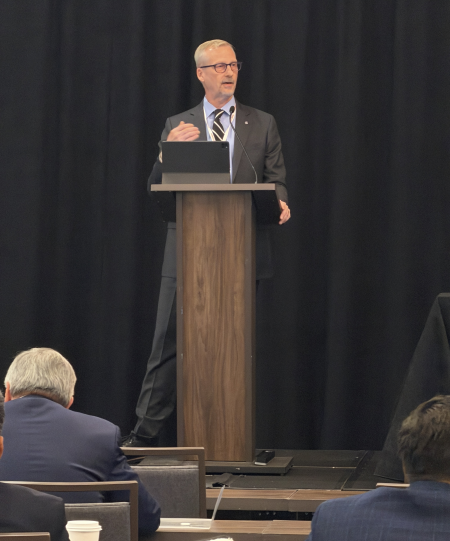
Photo: Charles H. (Chip) Brower II, Chair of the ITA Advisory Board, delivers welcome remarks to open the 38th Annual ITA Workshop, June 10, 2026.
A Field at an Inflection Point
Consent is the bedrock of international arbitration — and the 2026 Workshop made clear it is also its most contested terrain. Across panels spanning commercial and investment arbitration, faculty examined who agreed to arbitrate, what they agreed to, and how those agreements are interpreted, limited, or expanded in practice. Corporate groups, shareholders, funders, and affiliates are increasingly drawn into proceedings despite never signing an arbitration agreement. States reshape treaties, resist consent in contracts, and challenge tribunal jurisdiction on sovereignty grounds. Meanwhile, digital contracting and AI-generated terms raise fundamental questions about whether consent formed online is consent at all.
The program opened with the Young ITA Roundtable — a session designed to set the stage by surfacing consent-related controversies from the pre-arbitration phase through enforcement. Faculty considered whether consent is truly the foundation of arbitration when agreements are unclear, when non-signatories are joined, and when awards may be enforced against the assets of parties who never participated in the proceedings.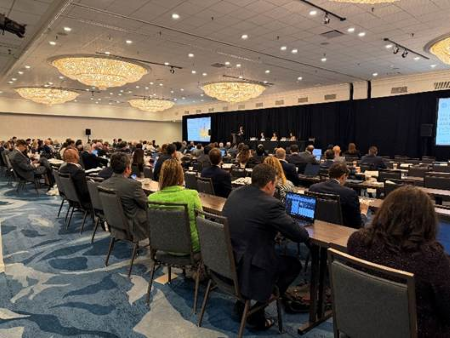
Photo: Attendees gather for the 38th Annual ITA Workshop and Annual Meeting at The Westin Oaks Houston, June 11, 2026.
Keynote and Special Highlights
The keynote conversation between Mélida Hodgson of Arnold & Porter and Laurence Shore of Seladore Legal anchored the program's central tension — whether arbitral tribunals and reviewing courts have gone too far, or not far enough, in scrutinizing consent. The exchange set a tone of candid, comparative inquiry that carried through the remainder of the Workshop.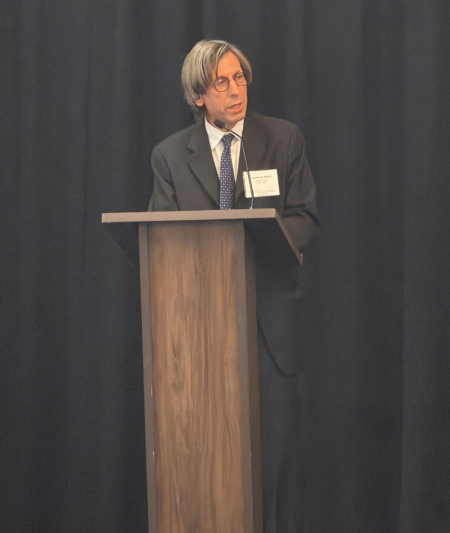
Photo: Laurence Shore of Seladore Legal addresses attendees during the keynote conversation, June 11, 2026.
A highlight of the program was the luncheon interview with Prof. Bernard Hanotiau of Hanotiau Tossens Goldman in Brussels, conducted by Workshop Co-Chair Dr. Crina Baltag. The conversation was the latest in a series organized by the ITA Academic Council to document the evolution of modern international arbitration in the words of those who have shaped it.
The program also marked a milestone: a celebration of the ITA's 40th Anniversary, recognized during the Thursday morning session by Isabelle Michou of Quinn Emanuel Urquhart & Sullivan.
The Conversations That Matter Most
Among the most substantive sessions were a panel on non-signatories and the expanding web of consent — examining group of companies doctrine, alter ego, veil piercing, and agency across jurisdictions — and a panel on judicial review that surfaced the widening divergence between courts that defer to tribunal findings on consent and those applying de novo review. Panelists including Prof. George A. Bermann of Columbia Law School, Sir Robin Knowles of SIFoCC, Retired Mexican Supreme Court Justice Hon. Alfredo Gutiérrez Ortiz Mena, and Hon. Marieke Witkamp of Arbitra International brought a genuinely comparative perspective to what has become one of the most unsettled issues in the field.
The Workshop closed with a forward-looking panel on the future of international arbitration — examining how opt-outs, aggregate proceedings, digital contracting, and state-driven reform will test the voluntariness and legitimacy of the enterprise over the next decade. The ITA Forum, held on the final morning, carried that spirit forward in an informal, off-the-record discussion among ITA members, faculty, and special guests — a format that has long distinguished the Workshop as a genuine community of practice.
Advisory Board Dinner
The program's social highlight was the Workshop Dinner and Advisory Board Annual Meeting, held at Houston Racquet Club on the evening of June 11.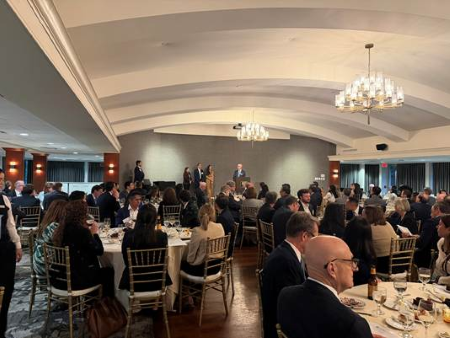
Photo: ITA members and Workshop faculty convene for the at the Advisory Board Dinner at the Houston Racquet Club.
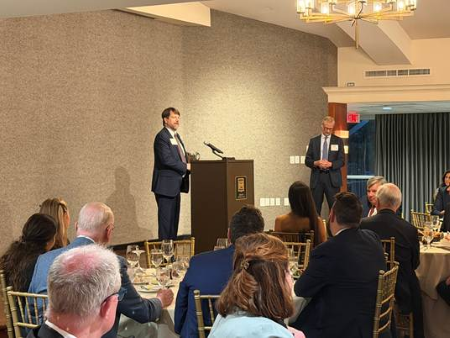
Photo: CAIL President Thomas (T.L.) Cubbage and ITA Advisory Board Chair Charles H. (Chip) Brower II address attendees at the Advisory Board Dinner at the Houston Racquet Club.
Looking Ahead
CAIL and the ITA extend their sincere appreciation to Workshop Co-Chairs Dr. Crina Baltag, Elliot Friedman, and Silvia Marchili; Young ITA Roundtable Co-Chairs Enrique Jaramillo and Mevelyn Ong; the distinguished international faculty; and all sponsors and attendees whose engagement made the 38th Annual ITA Workshop a program worthy of the field's most important questions.
For information on upcoming ITA programs or membership opportunities, visit www.cailaw.org/Institute-for-Transnational-Arbitration or contact the ITA team at ita@cailaw.org or 972-244-3414.
###
About the Institute for Transnational Arbitration – The Institute for Transnational Arbitration (ITA) was founded in Dallas in 1986 as a division of The Center for American and International Law. ITA provides advanced education for arbitrators, advocates, judges, business executives, government officials, and other professionals concerned with transnational arbitration of commercial and investment disputes. Through its programs, scholarly publications, and membership activities, led by many of the top global experts and supported by many of the world's most actively engaged corporations, law firms, and individual practitioners, ITA has become an important global forum on contemporary issues in the field of transnational arbitration. Visit www.cailaw.org/ITA to learn more.